Monday, November 2, 2026

Projapati dot com

"I'm a first-generation entrepreneur. My annual income runs into seven figures. You can say that I, Nikhil Nandan, am the crown jewel of my community," said Nikhil smugly, taking a sip of his cappuccino.

"What kind of partner are you looking for?" asked Rimjhim hesitantly.

"I'm looking for a woman, preferably with a master's degree, younger than 25, at least 5'4" but no taller than 5'6", weighing 50–56 kilos, with long hair, dressed conservatively, earning at least a quarter of what I make but ideally less than half. Do you fit the bill, Miss Rimjhim?"

"Mr. Nikhil Nandan, instead of wasting my time, you should have ordered a factory to build the woman of your choice. Goodbye," Rimjhim replied through gritted teeth and stormed away from the café.

Devang, her Relationship Manager, had recommended Dr. Mayukh Chowdhury's profile on Projapati.com, the matrimonial app where Rimjhim was searching for her Mr. Right. Devang had sent a message through the app:

"He is a very nice guy. You'll surely like him. If you have any problem, kindly contact me at 9830XXXX42."

Mayukh was very polite. Just when Rimjhim had started to think that maybe he was her prince charming, he announced grandly, "One thing I want to make clear. I wouldn't consider marrying someone who is active on social media because these apps are for cheaters. I'm protecting my peace."

Her next date was Soumya Mitra. He was a software engineer—good-looking, sharp-witted, well-read and well-travelled. She enjoyed the first date. That night, however, Rimjhim received a text message from him asking for her nude pictures. She stared at the message in disbelief, then, after regaining her composure, politely declined.


Rimjhim was furious with Devang now. She had spent a ridiculously large sum of money hiring a Relationship Manager on Projapati.com. She opened the app, noted down Devang's number and punched in the digits angrily.

"Hello... Rimjhim this side. Do you know how my dates went? They were simply disastrous. Do you even check the profiles of these men before recommending them to unsuspecting women?" Rimjhim shouted into her phone.

"Madam... this is—"

"What madam? I have spent a fortune on Projapati.com, and this is the result."

"Madam... please listen to me."

"No... you listen to me. One of the men you recommended even had the guts to ask for my nude pictures. Can you imagine?"

"Madam, you have dialled the wrong number. I'm Arindam Sen, Sub-Inspector, Cyber Crime Cell."

"What? Isn't it 9830XXXX42?"

"No. It's 9830XXXX24."

Silence.

"I'm extremely sorry," Rimjhim said meekly.

"That's all right," he said. "But you mentioned someone asking for your nude photographs. Don't delete the messages. Keep the screenshots. We can take appropriate action."

"Thank you, Mr. Sen. Bye."

She was about to disconnect when he said, "Though, since you've already told me so much about your disastrous dates, perhaps you should let me buy you a coffee."

He paused, then added, "By the way, I'm single and ready to mingle."

Rimjhim smiled at her phone.

Author's note: In Bengali culture, the butterfly—known as projapoti—is a central and auspicious symbol of marriage, transformation, and new beginnings.

Image source: Unsplash

(This story has been chosen a winner in the #Five00-26 contest hosted by the ArtoonsInn Writers Room in the month of October, 2026. The prompt was "Crossed Lines — The number you reached was wrong. The person who answered wasn't.)

Sunday, October 25, 2026

Review: Baarish Season 1


Baarish — Hindi — Prime Video

My Rating: 4/5

Binge-watched this web-series over the puja holidays and totally loved it.

At its heart, "Baarish" is a love story between two people, without any major twists or complications. The guy Anuj Mehta belongs to a wealthy business family, whereas the girl Gauravi hails from a typical middle-class family and is an employee in Anuj's company.

However, contrary to what pop culture tells us, they don't fall head over heels in love with each other at first sight and fight their families to get married. Theirs is an arranged match approved by the elders of the family. I loved the character of Padmini, Anuj's mother, who despite being the matriarch of a super-rich family, proposes Anuj's marriage to Gauravi. What Anuj and Gauravi have is a slow-burn romance, developing after marriage.

The series begins with a lawyer questioning Gauravi who is in jail. The entire series unfolds in flashback, giving the backstory of how she landed in jail. The series ends on a cliffhanger, leaving the audience eagerly anticipating Season 2.

Now, a few points that raised questions in my mind,

First, how come the entire series takes place during the monsoon? I understand that the backdrop of the rains was required to justify its title, but it seemed a bit strange to me.

Secondly, Anuj's sister Sreya is portrayed as a shrewd, cunning woman. Then why, in the first place, did she try desperately to marry Aniket, a middle-class, salaried man?

I loved both Anuj and Gauravi. Both of them are the epitome of goodness. Their love story is an uncomplicated one, with both of them always having each other's backs. They never let their family dynamics, even in the most trying circumstances, undermine their love and trust for each other. I especially loved Gauravi's character. Even though she has a middle-class background, she never forgets that when it comes to the marriage, she stands on an equal footing with Anuj.

A must-watch if you, like me, enjoy romance with a bit of family drama.

Thursday, September 24, 2026

The Breath of Fire


Gouri always woke up at dawn, when the first rays of the sun illuminated the horizon. After performing her morning ablutions, she swept her tiny one-room house clean. Then she took her morning bath and put on a cotton saree. Then she lit her stove and brewed some tea for herself. She drank the tea with puffed rice and then headed to the temple.

By the time she reached the temple, it was already bustling with devotees. The priest was performing the morning puja, and the temple premises were filled with the divine fragrance of flowers, incense sticks, sandalwood paste and ghee diyas. She bowed quickly before the Radha-Govinda idol, seeking their blessings, and then headed straight to the kitchen to cook bhog for the deity.

There were multiple chores waiting in the kitchen. Hari Mama, the elderly man, peeled and chopped the vegetables, rinsed the rice and lentils and washed the utensils. Mohan, the young boy, carried provisions and fetched water. But Gouri alone cooked the bhog to be offered as naivedya. The menu was not fixed — on some days, it was khichuri, on others, it was poori and fried brinjal, and on yet others, mohanbhog was cooked.

After finishing cooking, she carefully served the food on the plates meant for the deities, placing a tulsi leaf on each of them. Then the priest sprinkled a few drops of Ganga Jal around the plates, and Gouri arranged the plates before the deity. The priest's throaty chanting reverberated through the temple: “Om Apavitrah Pavitro Va...”

After the evening arati, when the temple bell fell silent and the courtyard emptied, Gouri packed the leftover bhog in a brass bowl and left for her home. She was a young widow when Hari Mama took pity on her and recommended her for the position of temple cook. Since then, her life had revolved around the temple.

Gouri looked forward to the evenings when, after the day's hard work, she finally got to rest and spend time with Khiroda Pishi. She didn't know much about Khiroda Pishi's whereabouts. She must have been from the neighbourhood. Whenever she asked Khiroda Pishi where she lived, she answered cryptically, “The world is my abode, dear.” It was difficult to guess her age from her features — she might have been eighty, ninety or even a hundred years old. She looked frail and emaciated. Her face was lined with numerous wrinkles; only her eyes looked bright like embers. Gouri never heard her approaching. One moment the doorway would be empty, and the next moment the old woman would already be standing there, smiling.

“Is there khichuri today?” Khiroda Pishi would ask hopefully. Smiling, Gouri would reheat the bhog on her stove and serve it on a plate to Khiroda Pishi.

Khiroda praised her cooking. They talked about small things—weather, temple gossip, childhood memories. Khiroda Pishi's eyes would become moist whenever she talked about her childhood in Radhapur. With time, Gouri began to wait for her every evening. She became her friend and confidante.

One day, the temple authorities announced that there was a widespread LPG crisis due to the war and that there would be no more bhog until the fuel supply returned. Gouri lost her work and her food. She didn't understand the war or geopolitics—only that her stove had gone cold.

At night, when Khiroda Pishi came, Gouri broke down and confided in her friend.

The old woman calmly said, “If fire is your problem, why didn't you say so earlier?”

Then she leaned forward and blew softly into the empty stove. A blue flame blossomed like a flower.

Gouri's eyes widened in astonishment. She became speechless. At last, when she regained her composure, she asked in a shaky voice, “Who... who are you, Kh... Khiroda Pishi?”

“Don't be afraid of me, my child. It's true I'm not human. I'm a wandering spirit. That's why I can only appear after sunset. I starved in my lifetime. That's why I kept coming for the bhog.”

Gouri let out an audible gasp. A spirit!

"But I need to think of an alternative livelihood for you. Why don't you start a tea stall in the evening, child? I'll provide the fire."

"Gourir Cha Ar Ta" started the following week in a cart. Gouri brewed tea and fried tele-bhaja. Workers, rickshawpullers and passersby gathered around her cart. The stall was doing brisk business. Gouri slowly began to regain her confidence and rebuild her livelihood.

One day, the LPG supply returned and temple bhog resumed. But on the advice of Khiroda Pishi, Gouri kept the tea stall. She now had financial independence and she didn't want to lose it.

It was the night of Amavasya. The stove was burning quietly between them.

The old woman watched the flame for a long time and said, "You won't need my breath anymore. The cylinders will come again tomorrow."

"Then you will still come to eat?", she asked anxiously.

The old woman smiled.

"No, child. My time here is over. Tomorrow I must begin another life."

The flame flickered once as she blew gently into the stove — for the last time. Before leaving, she said, "When I come back to this world, perhaps I will again taste your cooking."

The next evening, when she lit the stove alone, she thought that somewhere, a newborn child must have taken its first breath.

Glossary: 

Khichuri: Lentil and rice porridge in Bengali

Arati: A Hindu religious ritual of worship where light from a flame — fueled by ghee or camphor — is waved in a clockwise motion before a deity.

Tulsi: Basil in Bengali

Mohanbhog: A traditional Indian sweet dish made from roasted semolina, ghee, sugar and milk.

Bhog: The act of presenting the food to the deity.

Naivedya: The food prepared specifically for the deity.

Prasad: The food after it has been accepted, blessed, and energized by the deity.

Pishi: Paternal aunt in Bengali

Tele-bhaja: fritters in Bengali

Gourir Cha Ar Ta: "Gouri's tea and snacks" in Bengali

Amavasya: The new moon in Bengali.

Image Source: Unsplash

(This short-story has been chosen a winner in the "Pass The Pen" event hosted by ArtoonsInn Writers Room.)

Monday, August 31, 2026

A Bond Without a Name

I watched in amazement as Vijay came back from his village with his newly-wedded wife. Vijay was my husband. That a man like Vijay could secure a wife for himself, not just once but twice, was a real surprise. But then, he hailed from a famine-stricken village where a man like Vijay was considered "a catch" to the fathers of marriageable girls. He worked as a security guard in this large residential complex named "Magnolia Towers." I was his wife and I knew him better than anybody else. That was precisely the reason why I was so scared when I saw him bring home another bride.

"Kamala, come inside. There's nobody to welcome you here. No in-laws problem. You'll reign over my household, my queen!", Vijay tried to sound like an amorous lover besotted with his wife.

The young girl named Kamala smiled coyly at Vijay and stepped inside the house. I wished I could stop her before it was too late. 

One day, Kamala discovered a faded photograph of mine, taken on our wedding night. She showed the photograph to Vijay.
"Oh, that's Prabha— my first wife. She was a crazy woman— always shouting, finding fault with this and that. She died in a freak accident," Vijay dismissed her as if he was happy to get rid of me.

But Kamala didn't let my memories die. She dusted the photograph, framed it and put it in the prayer room. If I ever had a sister, she would be like Kamala, I guessed. 

Soon, Vijay started to show his true colours. He started to drink country liquor, squandered away his hard-earned money on alcohol and beat Kamala whenever she tried to protest. Seeing no way out, Kamala began to work as a domestic help in a few flats to supplement the family income.  This reminded me of my own marital life. It was the same story. One day, Vijay had hit me so hard in his drunken stupor that I lost my balance and fell hard against the wooden table, injuring my head fatally. He didn't care to take me to the hospital. I died without any treatment. 

Now that the same story was repeating in front of me, I was determined to save this girl.

That day, Kamala was washing the laundry while Vijay came back drunk. He had seen Kamala talking with the gardener earlier that day. He picked up a stick to beat her. I knew that the moment had come. I nudged a bucket of water laced with detergent that Kamala kept ready. It splashed on the floor. In a fit of rage, Vijay charged at Kamala and lost balance. He fell hard on the floor and struck his head against the same wooden table. He was dead.

"Prabha didi, I know it was you who saved me," Kamala whispered in front of my photograph. For the first time in years, I felt light. A golden light embraced me, and I became part of that light.
Image Source: Unsplash

This short-story has been chosen a winner in the fortnightly "The Spirit of Asia Contest #208, (Topic: Some Relationships Have No Name), hosted by the Asian Literary Society.

Three Generations in Olive Green


It was the day of the historic passing out parade at the Indian Military Academy, Dehradun. The Honourable President of India herself was present to grace the occasion. As the ceremonial tune echoed across the Chetwode Drill Square, Lieutenant Aditi Sen took Antim Pag— the final step that transformed a cadet into an officer. She felt a surge of pride as the realization sank in. Tears blurred her vision as the bittersweet memories of her arduous journey as an army officer in the making came flooding back.

She remembered the stories her grandfather used to tell her when she was a child— stories of bravery, sacrifice and selfless service in the defence of the nation. Her grandfather retired as a Naib Subedar from the Army while her father retired as a Subedar. Papa was absent from much of her childhood, posted at distant corners of the country. She waited for his visits and dreamt of becoming like him one day. It was her mother who always encouraged her to follow in the footsteps of her father and grandfather. When her grandfather was serving in the army, women were not inducted as officers in most branches of the Army. Later, she heard from her father that talks about inducting women into the defence services were underway. Papa was hopeful that something would come out of it, though it might take time.

Aditi looked impressive in her crisp uniform. Her parents had also arrived in Dehradun to witness the parade. Just the day before, IMA had presented the parents of graduating cadets, the Gaurav Padak— a medal recognising the parents' contribution towards sending their children into the service of the nation. Aditi watched her parents gleaming with pride as her mother received the medal in her hand, while her father stood beside her.

Aditi became nostalgic again. She remembered vividly the day she passed the National Defence Academy examination. She was so excited that she could barely sleep for the next few days. Then she cleared the Services Selection Board interview. That day, she was on cloud nine. The three years at the National Defence Academy flew by in a jiffy. There was rigorous training in the academy— cross-country runs, obstacle courses, weapon training and so on, along with male cadets. Friendships were forged for life. The final year of pre-commission training at IMA, Dehradun, had honed her into the officer she was today.

It was time for the pipping ceremony when newly commissioned officers wear their ranks and insignia for the first time. Parents were given the honour of removing the cover of the rank badge on the uniform. Aditi's parents stood on either side of her and removed the covers to reveal the gleaming stars. Then they embraced her in a tight hug. 

Aditi had successfully followed in the footsteps of her father and grandfather, carrying forward her family's legacy of service to the nation. She had not merely inherited those footsteps— she had added her own to the path.

Authors's Note: The story is inspired by the life of Lieutenant Sheetal Mehlan who is among the first batch of women officers to graduate from the Indian Military Academy.

Image Source: Unsplash

This story has won a Certificate of Appreciation in the fortnightly "The Spirit of Asia Contest #209", (Topic: Inherited Footsteps), hosted by the Asian Literary Society.

Tuesday, July 21, 2026

The Same Sky, The Same Moon

Once I dreamt of sharing a life with you,
That was long before life happened
And led us in different directions,
Living different lives in different cities.

I wish the best for you from afar,
Not knowing whether my prayers reach you quite—
Travelling across the distance between us,
Touching you like a whiff of silver moonlight.

I still remember your distinct smell—
Sweat mixed with nicotine
The touch of your callused palm
On the outstretched hand of your queen.

No matter how far you're from me,
Sharing your life with someone else,
I know we both live under the same moon,
And that's my only solace.

Image Source: Unsplash

(This poem received a "Special Mention" in Storyscrapers #RhymeShots prompt, "Under the Same Moon".)

Monday, July 20, 2026

Beneath the Same Umbrella


After days of incessant downpour, the road was no less than a river. A sudden gust of wind broke my umbrella. I shivered involuntarily as the cold raindrops hit me. 
"Madam, please come under my umbrella," a kind fellow pedestrian said.
I was in no condition to argue. I hurriedly took shelter under his umbrella. When I lifted my face to thank him, time seemed to stop.
A decade ago, he had left for his higher studies abroad.
The monsoon had brought us together under the same umbrella.
A married woman. A man she once loved. Under the same umbrella, yet destined to walk separate ways.

Image Source: Unsplash

This blog post is part of ‘Blogaberry Dazzle’ hosted by Cindy D’Silva and Noor Anand Chawla in collaboration with Mister Tikku.

Friday, July 17, 2026

A Rain for Every Soul


"Today's rain is personal. Please step outside at your own risk," the News anchor announced calmly. I couldn't understand anything. 

Meanwhile, it had started to drizzle. Pinky, my five-year-old daughter, bounded up the stairs to terrace and started to jump in the rain. I followed Pinky to the terrace.

The raindrops seemed to play hide-and-seek with Pinky. Wherever she moved, the raindrops moved away to make space for her. 

Astonished, I stepped onto the terrace. Soft raindrops fell on me, dissolving years of grief I'd carried since my husband's death.

Then I understood the forecast. That rain was, indeed, personal.

(This story has been chosen a winner in #WordplayWednesdays hosted by "Content Crafters Collective." The prompt was "Today's rain is personal.")

Image Source: Unsplash

Monday, July 6, 2026

The Words He Left Behind

My classes had just ended when Nilima aunty called.
"Misti, please come home as early as possible. Your father is not keeping well."
My father had been bedridden after a stroke for almost one and a half years. His sister, Nilima aunty— a widowed woman in her mid-fifties, lived with him and took care of him. For that, I was grateful to aunty. 

I booked the first available flight to Kolkata, my hometown. Even then, I couldn't make it in time. The messenger of death had already snatched my father, the man who always made me feel safe and secure. My mother had passed away when I was a little girl. I was an orphan now.

The next few days were a blur of activities— performing rituals for the departed soul, welcoming guests and so on.

After everything was over, a quiet silence shrouded our house. I was overwhelmed with grief and decided to stay back for a few more days before heading to Bangalore. One afternoon, Nilima aunty handed me a blue, leather-bound diary.
"Misti, your father gave me this diary and told me to hand it over to you. Please keep it."

That night, after finishing dinner, when I was alone in my room, I opened the diary. The first few pages contained practical details— insurance policies, bank account details, investments and other things Papa wanted me to know after he was gone. There were also neatly scribbled notes on menstruation. I smiled through my tears, remembering how Papa was the first to teach me about menstruation during my adolescence. 

After some pages, I stopped abruptly. There was a letter addressed to me.
"Dear Misti,
Hope this letter finds you in good health and spirit. When you read this letter, I'll be far away from you— resident of a different world altogether.
Today I want to tell you something I've hidden from you all your life. I told you that your mother had passed away, when in reality she had abandoned me for a rich businessman. You were just five years old— too little to understand the full import of the word 'divorce'. She didn't claim your custody and I was only too happy to have you in my life. In my bid to save you the heartache and trauma of your parents' separation, I made up the story of her illness and subsequent death. But Misti, please don't misunderstand your mother. She loved you in her own way. She was not happy with me. So she searched for happiness in another man's arms. And everybody, including our mothers, deserve to be happy, right?
I might have been an awful husband, but I tried my best to be a good father. Only you can tell how I fared as a father.
Be happy. My blessings are always with you.
With love,
Papa."

Tears pooled in my eyes. "You are the best father a daughter could ever have, Papa.", I whispered through my sobs.

Image source: Unsplash

This story has been chosen a winner in the fortnightly "The Spirit of Asia Contest #207" (Topic: My Father's Diary), hosted by the Asian Literary Society.

This blog post is part of ‘Blogaberry Dazzle’
in collaboration with Mister Tikku.

Wednesday, June 10, 2026

Book Review: The Art of Moving On: Healing after Heartbreak

The Art of Moving On: Healing after Heartbreak (English)
My rating: 3 of 5 stars

Heartbreak is a near-universal experience. Yet we are often at a loss when it comes to dealing with heartbreak. What makes heartbreak particularly difficult is the fact that it comes with a mixed bag of emotions — sadness, longing, regret, and hope, often all at once.

This book offers some practical steps to heal from heartbreak and illustrates the steps with examples followed by a few reflective questions. I wish I had come across this book when I was younger. It could have saved me a great deal of heartache.

Some phrases and sentences in the book are repetitive. It could have benefitted from a tighter editing.

Recommended for young men and women navigating the pain of heartbreak. Even for those who have never experienced a broken heart, it offers useful guidance during periods of major transition — whether a career change, personal transformation, or the uncertainties that accompanies new beginnings.


Wednesday, June 3, 2026

Two Wheels, Many Memories


Pedalling fiercely,
I raced to the school;
My ponytails bounced,
Brushed past me wind cool.

The cycle became my companion
Day in and day out—
I hung around with my friends,
As my laughter echoed down the road.

Be it school, be it coaching classes,
I had my trusted friend,
It carried me on its back
Swiftly manoeuvring through every bend.

I was a free bird,
Travelling wherever I liked,
Low-maintenance, no-carbon travel
This friend of mine afforded.

I grew up and secured a job,
I was able to afford a car,
But this friend stayed in a quiet corner
Of my home and my heart.

Image Source: Art Attack on Unsplash

(This poem written on the occasion of World Bicycle Day has been chosen a winner by Storyscrapers.)

Thursday, May 28, 2026

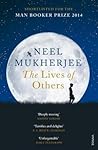
Book Review: The Lives of Others


The Lives of Others
My rating: 5 of 5 stars

"The Lives of Others" written by Neel Mukherjee was shortlisted for the Man Booker Prize 2014. That piqued my interest in picking up this book. And I've not been disappointed. It's an extremely well-written novel.

The Ghoshes are an upper middle-class family living on Basanta Bose Road, with their fleet of servants. The book traces the intersecting lives of the members of the Ghosh family, along with the lives of those who play prominent roles in their lives. The characters are well-portrayed and we get a glimpse into their inner worlds. The author has done a commendable job in dissecting the lives of the characters almost with surgical precision. The only drawback is that the vocabulary is a bit difficult. While reading the book, I had to pause at many places and search for the meanings of the words.

The novel is set primarily in the Calcutta of late 1960s. The naxal movement and the lives of naxalites are portrayed so vividly that I almost teared up reading the book. Then there's the recluse mathematician who fought against all odds to secure his place in the world. The forbidden love that blossomed between a young naxalite and his widowed aunt. The venomous women indulging in dirty domestic politics. All the quirks and eccentricities of the characters have been etched in vivid detail.

It's the kind of novel that will stay with you long after you turn the last page.

Strongly recommended for readers of literary-fiction.

View all my reviews


Thursday, May 14, 2026

A Holiday Gone Wrong


Priyo, Rini's husband, announced from the living room, "Good News! The government has declared no-work-day for all tomorrow." Rini was elated. 

Next day, there was no school, no office. Priyo went to market, but soon came back disappointed. All the shops were closed. Rini somehow managed to cook lunch with leftover vegetables. The newspaper had not been delivered. The maid was absent. Rini wanted to visit the salon, but it was closed. In afternoon, she wanted to watch a movie with her family. But all multiplexes were closed. Exasperated, she switched on the television. There was nothing— the screen blank. Now she wanted the cursed holiday to be over soon.

Image: AI generated

(What if the clock stops ticking for the economy, but keeps moving for the soul? A day with zero output, zero deadlines, and zero labor. Is it a dream or a descent into chaos? This tiny tale written on this prompt had been chosen a winner by team "Storyscrapers".)

Monday, April 20, 2026

Between Classes and Heartbeats


College.
First day.
Curious spectacled eyes.
Smile tugged at heart-strings.
Crush.

Classes.
With you.
Lab experiments together.
Hidden confession letter found.
Love.

Image Source: Unsplash

(This poem has received a "Special Mention" in Day 10 of NaPoWriMo 2026, hosted by Storyscrapers, Prompt: Double Elfchen on forming a new connection or friendship, Style: Two elfchens, 11 words each, 1-2-3-4-1 structure×2.)

Thursday, April 9, 2026

The Forbidden Lesson


When the proposal came for my marriage, I was just twelve years old. Back then, I was an unlettered village girl from Barisal, though I was well-known for my beauty. My husband, Pratap Narayan Roy Chowdhury hailed from a wealthy Zamindar family of Calcutta. He was a widower in his mid-forties. Despite the obvious age gap, my parents readily agreed to the match for two reasons. The first was his unbounded wealth. Second — and more importantly — he demanded no dowry which would have been impossible for my father to provide. 

The marriage took place with much pomp, and I set foot in my matrimonial home in Calcutta. It was better called a palace than a home. Cavernous halls, teakwood furniture, a retinue of servants - the young, timorous Hemangini was mesmerized.
*
When I first stepped into my matrimonial home, I was awed. This palatial house and its customs were a far cry from my parental home in Barisal. There was a pantheon of deities in the puja hall, each of whom had to be worshipped and sought blessings from every day at daybreak. Then there was the huge kitchen with separate vessels for cooking vegetarian and non-vegetarian food. Amidst all these, I was at sea.

Sensing my quandary, my widowed co-sister-in-law Charushila took me under her wing. She was the widow of the deceased elder brother of my husband, Rudra Narayan Roy Chowdhury, who had died of drink. Charushila didi gently guided me through the complex maze of wifely duties supposed to be performed by me. In my turn, I was smitten with her. I had heard that before her marriage to my brother-in-law, she had attended Bethune School for a few years. Though she was a young widow, I had never seen her wallowing in self-pity. Rather, there was a quiet dignity about her that set her apart from the other women of the andarmahal. 

My husband's widowed mother was the mistress of the household. My husband, her only surviving son, was the apple of her eye. She never approved of Charushila. She believed her elder son's death to be an unfortunate consequence of his wife's education and she made no effort to hide her displeasure. I naĂŻvely believed my mother-in-law. Once I asked Charu didi why she became literate if that only meant inviting the curse of widowhood. She gave out a dry laugh. 

"Yes, that is the prevalent view about widowhood. But Hem, do you know that this view has already been challenged by Gourmohan Vidyalankar in his Stri Sikshavidhyayaka, which defends women's education?"
*
In time, I grew close to Charu didi. I longed to be like her—educated, opinionated, unconcerned with society's strictures. One auspicious day, with the blessings of Goddess Saraswati, I began my lessons in reading and writing under her tutelage.
*
As the married daughter-in-law of the house, the duty of annual worship of Goddess Lakshmi had been bestowed upon me. I still vividly remember that evening — the full-moon night of autumn, on the eve of Lakshmi Puja. 
I was busy cleaning the altar of the goddess when a crumpled piece of paper slipped out from beneath the idol. 
For a moment, I only stared at it.
And yet, before I could stop myself, I picked it up.
As my eyes fell upon the words, the ground seemed to slip beneath me.

"Dear Nalin,
Are you so reckless to send me a letter through Khemi? You place me in grave danger by such foolishness. Don't forget that I'm a widow. The prayer room is a safer refuge for our exchange. If you have anything to convey, leave your letter beneath Mother Lakshmi. 

What else can I say? You are enthroned in my heart. My life is barren. The only solace I know is that you have granted me a place at your feet. Please don't deprive me of that shelter.
 
Charu."

With a trembling hand, I placed the letter back in its place. Nalinikanta was a distant cousin of my husband, whom he had sheltered in our house. I heard whispered gossip that he was involved in swadeshi activities.

Secrets are tempting. They cast a spell upon the mind. The same happened with me. I started checking the prayer room discreetly every day to read the secret exchanges.

More letters were discovered.

"Charu,
You are an intelligent and educated woman. You can marry a suitable man if you want. After all, Ishwar Chandra Vidyasagar's efforts have legalised widow remarriage. 

I don't consider myself worthy of you. My life is dedicated to the motherland. Marriage, children, domestic life — these are not meant for me.

Forgive me if you can.

Nalin."

"Dear Nalin,
Don't think that I'm seeking marriage. I have been a wife once, and yet I never knew what it was to love. I have no wish to bind myself in another marriage devoid of love.

What I have found in you, I cannot name — but it is enough for me.

Charu."

The letters were a revelation to me. For the first time in my life, something stirred within me. The vermillion in the parting of my hair, my colourful sarees, the conch-shell and iron bangles I had worn with such pride till then — all at once seemed to lose their meaning.

And for the first time in my life, I felt a quiet envy of Charushila didi.

Image source: Unsplash

Monday, April 6, 2026

An Altar in Your Name


Your memories remain tucked away
In the quietest corner of my heart,
In my solitary hours, I retrieve them,
And my imagination crafts them into a lover—
Living, breathing, whispering sweet nothings in my ear.

Your eyes are sad, translucent with pain,
I long to hold your face in my palms and to kiss your eyes,
I transform my solitude into love—
Dark grey monsoon clouds, heavy with mourning, hover in the sky,
I ask them to send my love and kisses to you.

Desire rises in me like waves,
And breaks at the shore of my soul,
Bewildered as I am, unsure what to do with them,
I carve an altar with them,
And mark it with your name.

Image Source: Unsplash

(This poem has received a "Special Mention" in Day 3 of NaPoWriMo 2026, hosted by Storyscrapers, Prompt: Sculpted by the Poet, Style: Descriptive.)

Saturday, April 4, 2026

The Soul of Verse


Poetry is not just coruscant language
With its ballads, rhythm and rhyme,
It is expression of the soul,
In terms of rasas nine.

It's the connection between the mundane and the universal,
Between the physical and the spiritual,
Reminding us of the beauty of the world
And that all reality is dual.

Impassioned outpourings
Give the poet refuge and solace,
Words touch a soft chord with the reader,
Applause is what greets the poet.

Image Source: Unsplash

(This poem has been a winner in Day 2 of NaPoWriMo 2026, hosted by Storyscrapers, Prompt: Side Effects of Poetry, Style: Free Verse.)

Monday, March 2, 2026

Book Review: Romance In My Coffee


Romance In My CoffeeRomance In My Coffee by Nisha Susan
My rating: 4 of 5 stars

Teenage is a phase of life when you're neither innocent nor mature. "Romance In My Coffee" captures the different hues of teenage romance through a few short stories. Among the authors of the stories, there are a few prominent names like Andaleeb Wajid, Jerry Pinto, Nisha Susan, Suniti Namjoshi etc.

The stories portray the teen protagonists with all their quirks. There are stories on myriad themes — same-sex love, an imaginary love interest, jealousy in love, a disabled protagonist yearning for love, one-sided lust, love that doesn't get parental approval, dream of an idyllic life with a loved one, meaning of love for an asexual protagonist. The stories will make you pause and reflect on what love truly means.

Enjoy this book with your coffee!

View all my reviews

Monday, February 16, 2026

Book Review: Parenting Unplugged: The Drama Mama Diaries


Parenting Unplugged: The Drama Mama Diaries
My rating: 4 of 5 stars

"Parenting Unplugged: The Drama Mama Diaries" is not a parenting guide, as Lalitha herself has made clear in the last chapter of the book. Instead, it's a compilation of funny anecdotes about parenting adventures (and misadventures) that every mother will find relatable.

When I started reading the memoir, the opening chapter transported me to my own initial days of motherhood — the trepidation and anxiety of giving birth, the unadulterated joy coursing through my veins after becoming a mother — everything came rushing back like a torrent. From learning to feed and burp the child to having that difficult conversation about "Where do babies come from?" with the child — every major parenting challenge and some minor ones faced along the way, have been discussed.

"Drama Mama" — as Lalitha calls herself — is far from perfect. She is not the epitome of sacrifice. Nor does she claim to be one. She is just a mother with all the follies and foibles that come with being human.

The book is witty, humorous and inherently entertaining. There are many laugh-out-loud moments in the book. There are times when you'll chuckle to yourself, at other times you'll find it hard to control the erupting laughter. There's never a dull moment in the narrative. Instead of sounding preachy, the book makes parenthood sound like a journey full of love and laughter, while growing as a mother along the way.

A must-read book for all the mothers and would-be mothers. Even if you are neither, you'll enjoy this book written by the Queen of Humour, as it'll surely tickle your funny bones.

Friday, January 9, 2026

Harvest of Hope


I had sown the seeds
Long ago in the monsoon,
Now the golden harvest
Will come home soon.

Seeds mingled with
sweat and blood in the field,
Were planted with the hope
Of a bountiful yield.

They remind me of
Those days of struggle endless
Days of hard labour
Laced with wild hope and madness.

My eyes are moist today
Blurring the golden vision in my front,
I forget how days of hard work
Have made me gaunt.

Now the monsoon clouds
Have taken their leave,
My field is filled with crops
Swaying their heads in the gentle breeze.


Friday, January 2, 2026

A Big Fat Indian Delay


"This isn't what I planned for today.", mumbled Sonia under her breath. But the day had begun as usual. In the morning, she received a message from IndiSlow, "Hi Sonia, get ready for your trip! Your flight IndiSlow 3F 176 to Bengaluru departs today at 11:30 am. We look forward to welcoming you aboard. Safe travels, The IndiSlow Team." 

Though a colleague had warned her that the IndiSlow's schedule was completely haywire, she had no other choice but to go ahead. This trip was urgent. After all, her wedding reception was in Bengaluru the next day. How could she possibly cancel the flight and skip her own reception?

Since childhood, Sonia had dreamt of becoming a bride. She always wanted a big fat Indian wedding - the kind of wedding that Madhuri Dixit had in "Hum Aapke Hain Koun...!" and Kajol had in "Kuch Kuch Hota Hai". Then she grew up, finished her studies, got a job, met Siddharth and fell in love with him. Through it all, that little girl's dream stayed tucked in some quiet corner of her heart. When their marriage was finally fixed, it felt like her long-cherished dream was about to come true. 

Hers was a cross-cultural marriage. Sonia was a Bengali, while Siddharth hailed from Karnataka. The wedding was to take place in Kolkata and the reception was scheduled in Bengaluru. The wedding, in stark contrast to Sonia's expectations, was a tedious affair. The endless rituals, keeping a fast the whole day while watching others wolfing down delicacies, relatives coming out of the woodwork, the chanting of incomprehensible Sanskrit hymns while sitting in front of the fire - it was not fun in the least. At the height of despair, even the thought of divorcing Siddharth crossed her mind. Then realisation dawned that she couldn't possibly divorce him unless and until she married him. She was looking forward to the reception where she would have to do nothing except accepting gifts from the guests with a smiling face. 

She left for the airport in the morning, along with Siddharth, her parents and a handful of close friends and family members who were supposed to attend her reception. The information board displayed that the flight would go ahead as scheduled. But minutes before the scheduled time, a gentleman from IndiSlow informed the passengers that they didn't have a pilot to fly the plane. 

Passengers were furious. The rumour mill was abuzz that the flight might be cancelled. Sonia had no option left but to cancel the flight, her heart sinking.

No alternate travel arrangement was possible at this last hour. Sonia headed home with her entourage, called in the salon girl, decked up in fineries and appeared online for her wedding reception in Bengaluru. With folded hands, she and Siddharth apologised to the guests for not being able to attend their own reception in person and thanked them profusely for their gracious presence. Being a gourmet, Sonia sighed for missing the delectable spread of the reception buffet. 

Image source: Downloaded from Unsplash and edited by AI.