Thursday, July 16, 2020

TikTok

"To be creative means to be in love with life. You can be creative only if you love life enough that you want to enhance its beauty, you want to bring a little more music to it, a little more poetry to it, a little more dance to it.", writes Osho. Does this resonate with you? Are you blessed with a melodious voice and love to croon at times? Do you love to groove to the tune of songs? Are you an expert at cooking mouth-watering cuisines? Are you a fitness freak and want to share your knowledge about staying fit to the world at large? Or do you just want to talk about important social issues and want to bring some positive change in society? If any of these is true for you, you are a creative person beyond doubt.


We all know that the world wide web plays an important role in carving your creative niche and enabling you to reach out to more people. One such platform is TikTok. It's a very popular short video platform. Here you can create videos of singing, dancing, cooking, or you can just lip-sync to popular songs and brighten up an otherwise dull and dreary day.


But TikTok is not only about entertainment. It has also contributed towards educating masses about pressing issues of our masses. For example, recently the whole country was going through lockdown to contain the spread of COVID-19. In this time of the pandemic, TikTok launched an in-app quiz - "Kheloge Aap, Jeetega India", to build public awareness about COVID-19. Then there was the #GharBaithoIndiaCampaign to share ideas on how to stay safe and beat the lockdown blues.


Recently TikTok took an initiative under TikTok for Good to conduct workshops with various NGOs in order to generate awareness about critical social issues. The objective was to make the NGOs aware of how TikTok can be utilized to raise public awareness about pressing issues that concern the society at large. 


There was another campaign named #ShabashIndia as an intitiate to celebrate or rather salute the people who have contributed to the safety of the nation by staying at home or by working in order to contain the spread of COVID. TikTok created a fun video film to show how people are staying put by trying new things at home. 


In short, TikTok not just entertains, but educates also. "Our mission is to inspire creativity and bring joy.", says TikTok. By bringing the opportunity to showcase their talents to the masses, TikTok is surely democratizing creativity in India. So what are you waiting for? Download the TikTok app, unleash your creativity, make yourself known to all, or simply get entertained and educated. Click here to download TikTok. To watch the new videos in TikTok, click here.

Wednesday, February 12, 2020

Movie Review: Kadambari


"Tomarei kariachi jibaner dhrubatara
A samudre ar kabhu habo nako pathahara..."
(I have made you my life's cynosure
Ne'er again shall I be lost in this ocean.")

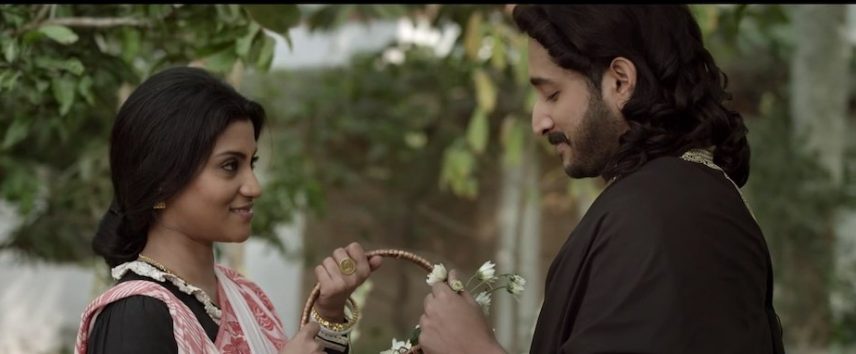
This song, written by Bengal's Nobel Prize winning poet Rabindranath Tagore, was published in 1880 in his collection of poems titled 'Bhagno-hridoy' when he was just 19 years of age. In this book, for the first time a page for dedication was included and this song was used. The page indicated that the book was dedicated to 'Mrs. Hey...'. Lots of research has been done to decipher the code name. The name of the main witch in the Macbeth is Heckety. It was later known that Rabindranath used to call his sister-in-law, Kadambari Devi, this name in order to ridicule her. Researchers now are almost certain that this 'Mrs. Hey...' is nobody else but Kadambari. Director Suman Ghosh's film "Kadambari", based on the life of Kadambari Devi, ends with this song.

The film "Kadambari", based on Sunil Gangopadhyay's "Prothom Alo", Mallika Sengupta's "Kobir Bouthan" and the writings of Rabindranath Tagore, scans the life of Kadambari Devi from the time she entered the Tagore household as a young bride till she committed suicide. Kadambari Devi's suicide is one of the sensational events in the cultural history of Bengal. Rabindranath Tagore was particularly fond of this sister-in-law of his. The film explores their relationship and the lives of the women of Tagore household of that time.

Kadambari Devi was the wife of Jyotirindranath Tagore and daughter-in-law of Debendranath Tagore. She was almost a decade younger than her husband, whom she married on 5th July, 1868, (the 25th day of the Bengali month Ashar, the year being 1275 according to the Bengali calender) at the tender age of ten years. It was customary for girls of that time to get married early, Kadambari being no exception. Being the daughter-in-law of the illustrated Tagore household, she had certain privileges, like getting educated or riding horse, unlike other women of her generation. 

Kadambari Devi was the daughter of the accountant of the Tagore household. That's why other women of the household, especially Jnanadanandini Devi, wife of Satyendranath Tagore, resented her being the daughter-in-law of the Tagore household and looked down on her. Early in her marriage, she had to accept the hard truth that she would never be able to become the 'Ghorer Bou' of Tagore household.

Rabindranath Tagore, her brother-in-law, was almost of her age. So while Jyotirindranath was busy with his literary nuances, theatre and other hobbies such as ship business and some other business ventures, her only confidante in her humongous matrimonial palace became Robi. Robi too found the biggest critique and greatest admirer of his literary endeavours in his Notun Bouthan. This friendship that blossomed between two persons of same age can't be termed as love, yet Kadambari found an emotional anchorage in this friendship, especially given the almost non-existent role of her husband in her life.

Kadambari failed to bear any children from her marriage and was taunted as 'banja'  (the Bengali synonym used for childless women) by other women of the household. She found solace in a little girl Urmila, daughter of her sister-in-law. Urmila had an untimely death. She fell down from the staircase while Kadambari was asleep. Everyone in the family accused Kadambari's negligence for Urmila's death.

Meanwhile, Kadambari's growing intimacy with Rabindranath irked other members of the Tagore family. They hastily arranged the marriage of Rabindranath Tagore, which made Kadambari further lonely. She at that time desperately sought the much-needed solace from her husband, who was supposed to be her partner for life. But at this crucial junction of life, she came to know of the existence of another woman in her philanderer husband's life, which ultimately propelled her to take her own life on 19th April, 1884, just four months after the poet's marriage with Mrinalini Debi. 

What prompted Kadambari to end her life prematurely, at the tender age of twenty-six? Twenty-six is by no means a dieable age. Was she seeking something more than friendship from her childhood playmate Rabindranath Tagore? Was this friendship bordering on the fringes of love? Or was it the inability to conceive a child? A child could have perhaps saved her loveless marriage with Jyotirindranath. She didn't leave any suicide note behind, so we can only speculate about the probable cause of her death. Or was it all these factors together that took a toll on her? Intrigued by the movie, when I searched the web to know more of this woman, the sepia coloured portrait that came up somehow gave me the impression of a lonely, bereft woman.

Kadambari's life serves as a reminder how far we have come from that era when women didn't have any identity apart from being someone's wife or someone's mother. It reminds us of the struggle our foremothers had gone through. A dysfunctional, childless marriage spoiled a woman's life who could have had a brilliant literary career had she been born in another era. We are fortunate to live in an era where we can think of a life outside marriage and kids. This movie reaffirms this fact and that's why it's a must-watch for all.

This post titled "Why The Movie Kadambari Made Me Appreciate My Freedom Just A Little More" has been published on Women's Web as a Featured Post. Featured Posts are a careful selection of highly relevant and interesting posts picked up by the editor's of Women's Web each day. To read the full story, Click here.

Thursday, January 2, 2020

Encounter of Rapists in Hyderabad: Is It Justified?


6th December, 2019. This day will be etched forever in the collective memory of women-folk of India. While four men accused of the heinous rape and murder of a woman vet Disha in Hyderabad was killed in an early morning "encounter" by the Cyberabad police, the day ended with the dismal news of death of the rape victim of Unnao, Uttar Pradesh. Is it a day to celebrate or a day to mourn?

The public opinion is divided on the legality and even necessity of the encounter killing of the  four accused. While many hailed the cops and the Telangana government for killing the four men, many in fact raised concern over due process of law taking a back-seat. Will it set a alarming trend of taking law in one's one hand? Or will it be able to instill fear in the minds of potential rapists and act as a deterrent for crimes against women?

Due Process of Law- What it means in India
The Nirbhaya rape case that took place in 2012 in Delhi, was so horrific that it shook the conscience of the entire nation. Nirbhaya was brutally gang-raped in a moving bus at night and later she died. One of the key accused in the case got away with minor punishment on account of being a juvenile at the time of the crime. Another died in jail, apparently by suicide. Rest four accused have not been executed till date, 7 years after the crime. Nirbhaya case is a classic example of "justice delayed, justice denied". Her poor parents are still waiting for justice for their deceased daughter. This is a case of following due process of law.

Take the more recent Unnao rape case. The 23-year-old gangrape survivor was beaten, stabbed and set ablaze by five men, including two of her alleged rapists, in her village in Unnao district in Uttar Pradesh on 5th December, 2019 while she was on her way to meet her lawyer. One of the accused, Shivam Trivedi, was granted bail in "due process of law" just 5 days before the ghastly incident. Yet the girl followed law and while running in a ball of fire, called the police control room. She suffered 90% burns and finally on 6th December, 2019, at 11:40 p.m. succumbed to her injuries. Hours after she was stabbed and set ablaze, she told her brother, "Save me, I don't want to die." Her words on her last day bring tears to my eyes. Being alive has become a luxury for women in India, which many cannot afford. Yet we are all praise for "due process of law." This is symptomatic of a larger systematic failure. India has failed her daughters. "Due process of law" has failed to make the women live their lives, let alone delivering justice to the victims.

Encounter Killing: What does the law say?
The only two circumstances in which such killing would not constitute an offence were
(i) "if death is caused in the exercise of the act of private defence", and
(ii) under Section 46 of the CrPC, which "authorises the police to use force, extending upto the causing of death, as may be necessary to arrest the person accused of an offence punishable with death or imprisonment for life."

So technically speaking, the encounter by the Cyberabad police is not an offence under the law. According to police, they had taken the four accused to the spot to reconstruct the crime and recover the veterinarian's mobile phone and accessories, when the unarmed men somehow managed to snatch two guns from their escort of 10 cops, all of whom were armed. Then they opened fire, while other two accused pelted stones and attacked cops with sticks. Police fired back as the accused tried to flee. Later police found the four accused lying dead. So here the death was caused due to the exercise of private defence by the police, which cannot be termed "offence".

But here some people are raising questions about the credibility of the claim made by police. Was it really an act of private defence on the part of the policemen? Or was it cold-blooded murder to shield the real culprits?

Already the National Human Rights Commission (NHRC) has taken suo motu cognisance on the basis of the media reports of the death of the four accused and ordered a spot inquiry by it's investigation team.

Fake Encounter: What does the law say?
In Prakash Kadam vs. Ramprasad Vishwanath Gupta, 2011, a bench of Justice Gyansudha Mishra and Justice Katju held that for fake encounters, the policemen committing it must be given death sentence. Take a look at the relevant part of the judgment:
"We are of the view that in cases where a fake encounter is proved against policemen in a trial, they must be given death sentence, treating it as the rarest of rare cases. Fake 'encounters' are nothing but cold blooded, brutal murder by persons who are supposed to uphold the law. In our opinion if crimes are committed by ordinary people, ordinary punishment should be given, but if the offence is committed by policemen, much harsher punishment should be given to them because they do an act totally contrary to their duties."

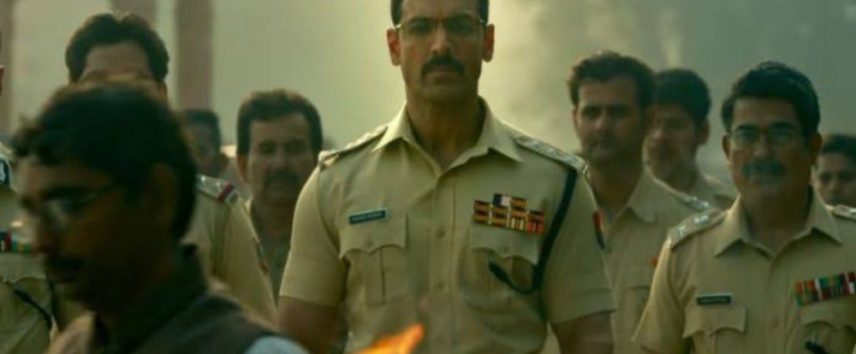
Clearly the cops conducting such encounters are at a disadvantage, jeopardizing their careers. Recently I watched a movie named "Batla House"directed by Nikkhil Advani where the character played by John Abraham engaged in an encounter against some alleged terrorists. Though the Batla House encounter is controversial to date, the movie clearly demonstrates the severe mental agony of the police officer behind the encounter. Nobody appreciated his efforts. Rather many raised concerns about his own malicious intentions behind the incident. He became an emotional wreck and at one point, he even thought of committing suicide. Thus it's clear that any police officer is not going to gain anything by taking law in his own hands. On the contrary, he has a lot to lose if proven guilty.

In this case of encounter at Hyderabad, Telangana High Court has ordered preservation of bodies and has asked the state to submit before it a video recording of the postmortem autopsy of the four accused. The court order came after it admitted a writ petition filed by a group of concerned women activists and Human Rights Organizations who alleged that the encounter killing was "extra-judicial" in nature.

The Petition filed by women activists
Take a look at what the women activists wrote to the Chief Justice:

"Endowing police with the sanction to commit murders of accused is no answer. It only distracts and shields the state from accountability. And celebrating such killings amounts to inhumanity. Such acts are uncivilized, brutal and those police-men responsible for today's crime must be brought to book. As women's groups, our challenge after today's incident only intensifies."

"We also demand that all police personnel who participated in the killing of the four accused be immediately arrested and prosecuted for the crime of homicide under Section 302 IPC."

I was shell-shocked to read the petition, that too filed by the activists who are supposed to work for women's welfare. What a strange country we live in! How strange it's citizens are! When Disha was gang-raped and set ablaze, nobody talked about her human rights. When the Unnao girl was beaten, stabbed, doused in petrol and set ablaze, nobody talked about her human rights. In this country, only the accused have human rights. Probably women are not considered human enough to have any human rights. 

Shouldn't we talk about bringing the judge who granted bail to the accused in Unnao case to book? Because if such a dangerous criminal was denied bail, the poor girl may have lived a little longer. Shouldn't we condemn the advocates who defended the accused in Nirbhaya case?

What Happens When You Normalise "Rape Culture"
Jollu Ramappa, father of Jollu Shiva, one of the accused in the gangrape and murder of Disha, told the media, "Many people committed rapes and murders. But they were not killed in this manner. Why were they not meted out such treatment?" This speaks volumes about how we have normalised "rape-culture". Now rape and murder of women are not seen as heinous crimes which call for capital punishment. Rather, awarding capital punishment to the accused is seen as gross injustice and human rights violation. Many so-called intellectuals further encourage such kind of claims. Advocate Manohar Lal Sharma, who defended one of the accused in Nirbhaya case, had argued that no man can have sex with another woman unless he gets excited. And without the cooperation of the woman, he can't get excited, essentially saying that all rape charges are fake. This kind of victim-blaming is rampant in our culture, leading to further atrocities against women.

V C Sajjanar: The "Encounter Cop"
In these circumstances, it takes someone as extra-ordinary as V C Sajjanar, Cyberabad Police Commissioner to deliver justice. In a country where only the accused have human rights, not the victim, it takes guts to do what he did. Salute to you, Sir! It's only because of people like you that I want to call India "my country". Otherwise, the recent incidents of crimes against women made me believe that women have no country. No wonder, Disha's parents have hailed the cops. Even Nirbhaya's mother is all praise for the Telangana police. 

My Own Experience

I myself have often returned home late from office. Once I went to attend a wedding reception straight from office.Though it was already late, the host insisted me to have dinner. When I returned home that day, my mother was livid. "Do you sometimes forget that you are a woman, not a man? If any untoward incident took place, everybody would accuse you only." On another occasion, I returned home at 1:30 a.m. after completing election duty. My mother advised me to stay back for the night, but I was craving for the cosiness of my own room after performing election duty for 15 hours at a stretch. My mother was shocked. "Don't you have any common sense? Which woman in her right mind takes such a foolhardy decision to return home at the wee hours of night?"

The Way Out
I dream of a country where every woman would be able to take foolhardy decisions of returning late at home without being reprimanded by family members. I dream of a country where every woman would live fearlessly. I dream of a country where the family members of a woman are not scared for her safety. To those criticizing the action of Telangana Polica, I'd request you all to put yourself in a woman's shoes and then judge why we are so euphoric about this encounter. All our lives, we live in constant fear of strangers, insecured to walk on deserted roads, afraid to return home late.

Surely, we need more fast-track courts, gender sensitisation of police force, stringent legislative measures to deal with such heinous crimes. Till we get all these, we need more cops like V C Sajjanar. Let every citizen of India be free from fear and insecurity. As Tagore had said:
"Chitto jetha voyshunyo, uchcho jetha sir,
..... Bharatere sei Swarge koro jagorito"
("where the mind is without fear and the head is held high
..... Into that heaven of freedom, my Father, let my country awake.")

Image is a still from the movie Batla House

This post has been published at Women's Web. Click here to read.

Friday, November 1, 2019

Living A Life Free From Regrets

Living A Life Free From Regrets

"Aye zindagi gale laga le
Humne bhi tere har ik gham ko
Gale se lagaya hai, hai na!"

(O life, embrace me.
See, I too have embraced every sorrow of yours, haven't I?")

Dear Life,
It has been more than three decades of our togetherness. So many crests, so many troughs, so many days, so many nights, so many years- you and I have gone through so much. It's you and only you who have been witness to my every success, my every failure, my every joy and my every sorrow.

So, after all these years of trials and tribulations, you may ask me whether I hold any regrets. But no dear, I don't really regret any of my decisions in life. Do you know why? It's simply because of the fact that I never let anyone take any decisions on my behalf. So be it my career choice or my personal choices- I have courage enough to own my journey this far.

I know that this journey has not been smooth for me. In fact, this journey gave me lot of heartaches and pain to face. What else can you expect it to be when I got separated even before turning thirty, got legally divorced in my early thirties and have been a single mother since then? People frowned at my decision. After all, most marriages in our country survive just on the basis of one-sided compromise of our women-folk. And who isn't familiar with the problem of abusive in-laws? Still, majority of women choose to 'compromise', for the sake of well-being of their children, for the sake of appeasing our patriarchal society, for the sake of keeping the sindoor on their forehead intact. Because any alternative to this seems fraught with danger. It can jeopardise their children's future or the social status they enjoy by virtue of being 'married'. But I always gave a damn to what society thinks. And I always wanted to realize the full potential of life, with little regrets. 

You know what, there were times when I just wished you to start using lubricants. Otherwise, the road seemed too bumpy. But neither were you supposed to use lubricants, nor was I supposed to feel less pain. But I never ever regret my decision to end my marriage. It lacked bliss. And I always search for that elusive thing called 'happiness' in life. Whenever I make any decision, be it related to my career or my personal life, I just ask myself one question, "Will it make me happy?" If the answer is yes, I go for it. If it is in negative, I never pursue it, however difficult it may be in short-term.
Today as I am penning this letter, I am crooning those lines from one of my favourite songs,
"Zindagi tere gham ne humein rishtey naye samjhaye
Mile jo humein dhoop mein mile chaanv ke thande saaye."

("The sorrows of life have taught me new relationships,
I found the comforts of shade under the bright scorching sun.")
How true is this! Happiness stagnates us, whereas grief makes us evolve into better, more matured version of ourselves. Today when I look back to my own younger self, I smile at her naivetè. Had you not given me my share of pain, I would have probably remained the same naive girl forever. It's because of that pain alone that I am a stronger person now. And I am firm in my conviction that no matter how difficult life gets in future, I wouldn't meltdown easily. 

Do you know, what are the things that I value most in life? The answer is self-respect and independence. And I am grateful to you dear life, for giving me the opportunity to keep both intact. I was fortunate enough to receive good education which enabled me to be financially independent. In retrospect, I think that gave me the strength to take some of the most difficult decisions in life- decisions which most women of my country lack the courage to take. I consider myself lucky in that respect. At least, I have the means to live life on my own terms, to live a life free from regrets.

Last but not the least, you dear life have been wonderful so far. You made me meet some fabulous persons and make some wonderful friends through this journey who have stood by me through thick and thin. You not just gave me pain, but also gave me extra servings of some good staffs. And I look forward to making many more memorable moments with you- moments to cherish for a lifetime without any regrets.

With love,
Forever-yours-and-only-yours,
Swagata.


This post was published first in Momspresso. Click here to read.

Tuesday, October 1, 2019

My Journey of Single Parenting

 single parent

Single parenting is not an easy job. Like so many other jobs in the world, it is difficult. But then, nobody ever promised that life would be easy and we would always walk on a bed of roses, without encountering any thorns.
My journey as a single mother began when my son was just one and a half years old. But in the true sense, I have been mothering him singly since the day he was born. I was going through a very turbulent phase of my life at that time. There was no bliss in my marriage and finally, one and half years after his birth, his parents got separated. So I was not a single mother by choice, but circumstances forced me to be one. And I have never held any regrets for that.

"Depression is the flaw in love. To be creatures who love, we must be creatures who can despair at what we lose, and depression is the mechanism of that despair.", wrote Andrew Solomon in his bestselling book "The Noonday Demon: An Anatomy of Depression". We who have gone through the bitter stage of breaking a marriage know very well how depressing this experience can be. Every heartbreak is painful. But this is especially true in case of marriages. We all start our marital life with a lot of expectations, with the hope of finding love, trust and companionship throughout our lives. So when it breaks midway, all it leaves behind is depression. In my case, coping with this phase became a lot easier because at least I had my son- someone to love and cherish for the rest of my life. So even a life without a partner seemed less terrible. A life which still had some purpose left- to raise another human being carved out of my own flesh and blood.

Since I have been a single mother for more than five years, I think I can share some of my experience here. During all these years, I am taking all the decisions regarding him alone. Right from which school he would attend to which paediatrician he would visit- I have been responsible for everything.

Most schools now-a-days are accommodative of single parents. I indicated in the school admission form itself that I was a single parent. On the day of parents' interview, I attended the interview alone. I still vividly remember the day. All other 'normal' parents were interviewed before me. Another single mother, who was a widow, was interviewed just before me. I was the last in the queue. On that day, sitting in a cold chair outside the principal's office on that cold December morning, how I wished I had a partner like everybody else, who would be equally interested in my son's well-being. Or sometimes, when planning for a vacation trip with my child, how I wished we were a normal family- a family consisting of both the parents and the child. Then perhaps we would have planned for the trip together.

The hardest part of single parenting is, perhaps, making peace with your past. Each time my son was required to make a family tree or a family photograph, I had to explain to him that unlike the families depicted in his text-book, his family lacks a father figure. Each time he got curious about his father and assumed his grandfather from his mother's side as his father or took a visiting male relative as his father, I had to make him understand that unlike his friends fathers, his father does not live with us. This is hard to understand for a child, especially given the fact that there is a depiction of perfectly blissful families in commercial ads, cartoons, school textbooks, or children's storybooks. We are oblivious of the presence of other alternative kind of families, like single parent families. 

Sometime back, I came across an article on internet about "empty nest syndrome" and how it affects single parents especially. This made me contemplate on my own future reality. It's a known fact that my boy will grow up soon and he'll leave his mother one day to find his own place in the world. Of course, we mothers also want to see our sons as independent human beings. But this takes us to the inevitable conclusion- what will the mother bird do once her chicks learn to fly on their own and leave the nest she has built so lovingly? She'll feel lonely, no doubt. These feelings of loneliness will probably be exacerbated in the absence of a partner. But lets face the reality: there's no way out for us. So I make a conscious effort to have my own social circle, nurture my own passion for reading and writing, so that when the time comes, I suddenly don't find myself out of job all of a sudden. When you don't have anybody to give your love and attention, be it your partner or children, don't consider your life lacks love. "Love is a state of Being. Your love is not outside; it is deep within you. You can never lose it, and it cannot leave you.", wrote Eckhart Tolle.

Lastly, when life gets too overwhelming, or emotions seem too out-of-control, just silently utter this prayer:
"God grants me the serenity
To accept the things I cannot change,
The courage to change the things I can,
and the wisdom to know the difference."

This post titled "5 Lessons I Learnt On My Journey As A Single Parent" has been published on Women's Web as a Featured Post. Featured Posts are a careful selection of highly relevant and interesting posts picked up by the editor's of Women's Web each day. To read the full story, Click here.

Monday, September 30, 2019

Book Review: City Of Nine Gates

City Of Nine Gates (City Trilogy #1)City Of Nine Gates by Pankaj Rajput

My rating: 3 of 5 stars


"An atheistic millionaire is forced to find and help his long lost friend achieve self-realization in a mystical 'City of Nine Gates' known only to the Gods and the wisest sages of the Advait and the Sankhya."

These lines from the back-cover of the book intrigued me to start reading this book. I thought it to be a blend of mythology with a modern story line, just like the books written by the likes of Ashwin Sanghi. But what awaited for me was a pleasant surprise. This book deals with a totally different subject-matter.

We all encounter lot of hardships and difficulties in life, which force us to ask, "Why me?" In this book, the author has tried to answer that question which has troubled mankind since eternity. He has woven a tale through which he has tried to elucidate the spiritual, supreme truth. He has attempted to make it accessible to common readers who may lack any prior knowledge of Hindu spiritualism. Basically, it combines the teachings of the Bhagavad Geeta and other Hindu religious scriptures and tries to enlighten the readers with their teachings with the help of a story. I'd like to share some of my favorite quotes from the book:

"Happiness normally brings complacency and makes us think that the goal of life is achieved. That's a sweet trap. Celebrate happiness as much as you cried in a time of adversity. But never deviate from the path to Moksha. Treat happiness as a phase of preparation for liberation- just like dejection is but a phase."

"Pain is the alarm!..... This most abhorred of all emotions is the key to the path of Moksha. It is only pain that cuts-off one's attachment to happiness, sadness, liking, disliking and the rest of the dualities of this mortal material world."

"Everyone in this world is alone and hence needs to be with someone. But there are those rare ones who stay alone as they never feel lonely and hence never need the company of others. Such rare ones who prefer seclusion and are devoted to God are most dear to him."

There are some minor editing mistakes at some places. Considering this to be the first edition, such mistakes are inevitable. The language is simple. The story is not fast-paced. So if you are looking for a gripping story-line, this may not be the ideal book for you. This is the kind of book to savour slowly, allowing yourself time enough for the teachings to sink in. If you have a spiritual bent of mind, you'll surely like this book. I myself am a regular reader of the Bhagavad Gita. So I found the author's way of telling the deeper truths of life through a story quite fascinating. Go for it if you want to explore the deeper meaning and purpose of life.


View all my reviews


City of Nine Gates - Pankaj Rajput

Monday, September 2, 2019

Movie Review: Mukherjee Dar Bou

mukherjee dar bou

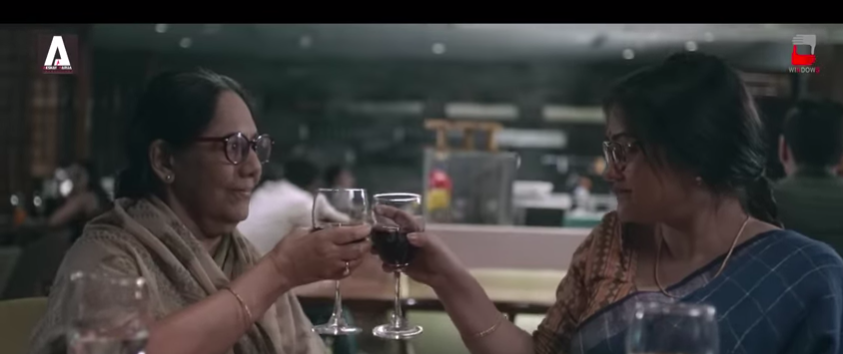
Meet Shobharani and Aditi, the mother-in-law and daughter-in-law pair. They live in the same flat and they both have one common identity: Mrs. Mukherjee. Like any typical MIL-DIL pair, both of them dislike each other. It may sound clichèd, like those typical soap-operas where MILs always conspire against their DILs and the DILs, in turn, hate their MILs. But the movie "Mukherjee Dar Bou" ("Wife of Mr. Mukherjee") offers a fresh perspective  on this clichèd topic. This movie is the debut film of Director Pritha Chakraborty. She has raised our expectation high in her debut film itself by making a movie  on a contemporary, relevant, relatable issue and make the audience think anew on the topic which has become clichèd.

The Plot

The plot revolves around the daily lives of Shobharani and Aditi, the MIL and the DIL.  Aditi is a typical housewife, whose life revolves around Saswata Mukherjee, her husband, and Ichchhe, her little daughter. After the death of her father-in-law, her mother-in-law grows increasingly hostile towards her. She starts finding faults in her every work, rummages her cupboard in her absence, starts throwing things in fit of rage and so on. Unable to tolerate any more, Aditi fixes an appointment with Dr. Aratrika Bhattacharya, a prominent Psychologist. The plot, which seemed clichèd till now, takes an interesting turn. Aratrika counsels both Aditi and her mother-in-law and helps them see the other person's point of view. We, the audience, also learn that just because a mother-in-law meted out injustice to her newly wed daughter-in-law, it's wrong to vilify her. She is a product of our patriarchal society- which has taught her to behave that way. It's always difficult for a woman to go ahead in her life, because in each step of climbing up, women are pitted against one another by this very society. That's why Aditi's mother-in-law hides carefully each of Aditi's job appointment letters which comes by post. Aratrika's counselling sessions improve their relationship significantly. The movie ends with Shabharani's Women's Day speech. Shobha, who always dreamt of performing on-stage since childhood but was never allowed, gave her debut speech on stage on the occasion of Women's Day. She said that her grandmother used to tell her that women are like pitchers. Any dent in that pitcher make it flawed. Now, what's a dent? A dent is her grandmother's wish to get educated or her childhood wish to catch tadpoles from pond like her brothers, wishes forbidden and frowned upon by a patriarchal society. The wishes never fructify. Instead, the women fill other women's lives with all the emptiness of their own lives. Like Shabha hid Aditi's job appointment letters. They have been granted only two things by society which they cling to: A house and an identity of being Mrs. X, Y or Z. On that special occasion of Women's Day, Shobha decided to give names to themselves: She, Shobharani and her daughter-in-law, Aditi. Not just Mrs. Mukherjee anymore. The audience gives them a standing ovation.

The Review

We are all accustomed to the popular saas-bahu soap operas, where the mother-in-law is the quintessential villain. The innocent daughter-in-law is always at the receiving end of all her evil plans. But this movie is a welcome relief from that familiar drama. Here Aditi, the educated, modern daughter-in-law, instead of suffering silently, tries to find a solution of this all-too-familiar problem. She consults a psychiatrist. And here the movie takes a turn. Alongwith Aditi, the audience also learns that the root-cause of the problem is not the evil mother-in-law herself, but the patriarchal society which makes the groom's mother behave rudely towards the bride. All women can relate to the characters of Aditi and her mother-in-law.
Both Koneenica Banerjee and Anashua Majumdar give stellar performances as the DIL-MIL duo. Biswanath Basu is the perfect Mr. Mukherjee- the middle-class, chauvinistic Bengali bhodrolok who is a product of a patriarchal upbringing. Rituparna Sengupta portrays the character of the psychiatrist convincingly. All the songs are appropriate. I specially liked the song "Khachar Pakhi", when Aditi advises the neighbourhood woman, played by Aparajita Auddy, to come out of an abusive marriage. It's strange how many women continue suffering in abusive marriages, because it's the easy way out. The song captures this irony very well.

'Boner pakhi bole, "Akash ghono nil, kono badha nahi tar.

Khachar pakhi bole, "Khachati poripati, kemone dhaka charidhar." '

(Free bird describes, " Deep blue is the sky, no hitch whatsoever."

Cage bird replies, "Look how clear is my enclosure.")
These lines resonated strongly with me.

Overall, this film is a must-watch, especially for the women audience.

This post titled "A Relief From The Typical Saas-Bahu Drama Is Mukherjee Dar Bou" has been published on Women's Web as a Featured Post. Featured Posts are a careful selection of highly relevant and interesting posts picked up by the editor's of Women's Web each day. To read the full story, Click here.